
Bartlesville eyes another water rate hike after five years of increases. Here's what we learned
Andy Dossett | The Wiley Post
Published April 25, 2026
For Bartlesville residents, the old adage of what goes up must come down doesn't apply to water rates.
After five years of steady rate hikes starting in 2020 that have raised the average household's utility bill by about 30%, city leaders are now considering another increase — this time a jump of more than 13% for the average home.
As the Bartlesville City Council spent over two hours on April 21 digging into the city's proposed budget for the upcoming fiscal year, one issue quickly surfaced: Water, wastewater and sanitation rates are likely going up again.
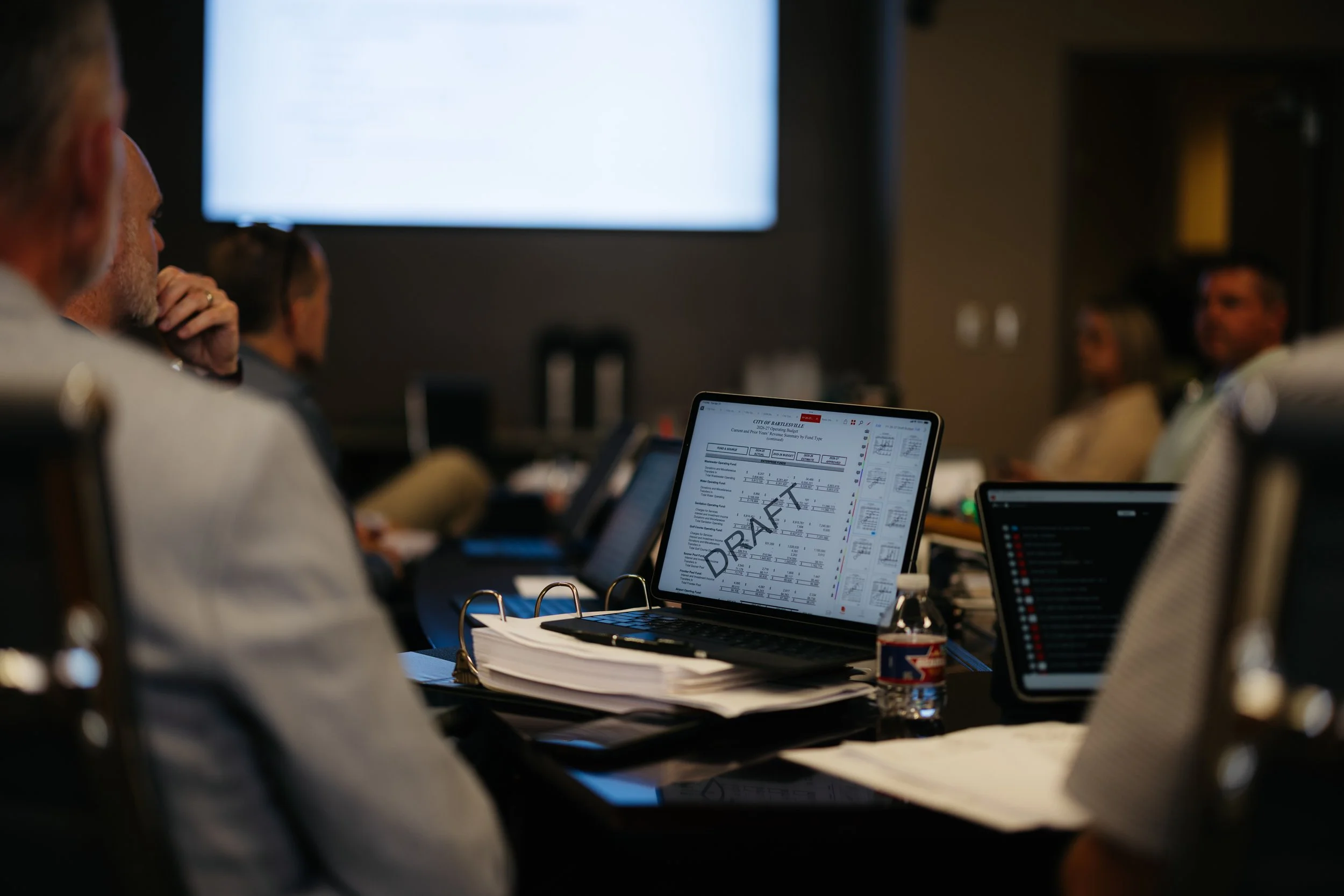
Bartlesville City Council attends a budget workshop to discuss upcoming changes to the 2025-2026 city budget on April 21, 2026.
Andy Dossett | The Wiley Post
For the average residential customer using 6,000 gallons of water a month, the city's proposal would increase the total monthly utility bill from about $117.43 to $133.11 — an increase of roughly $15.68 per month, or 13.4%, which is almost an additional $200 a year.
But how much an individual household's bill will rise depends on several factors.
That's because the city is changing several parts of the bill at once. Some charges are flat monthly fees, while others depend on how much water is used. If customers use more water, they may see a bigger increase. If they use less, they may still see their bill go up because some flat fees are rising, too.
Under the proposed plan, for example, someone using 6,000 gallons can expect 13.4%; someone using 4,000 gallons can expect 12%, and a household using under 2,000 gallons can expect 10.6%.
At the other end, customers using 10,000 gallons — the limit where higher rates kick in — could see a 15% increase.
Exact amounts are hard to estimate because factors such as how many trash cans a household has, the size of the cans, whether they have a second meter for watering the lawn, and the tier of usage all will play a role in each bill.
One thing is clear: Customers should expect to pay more.
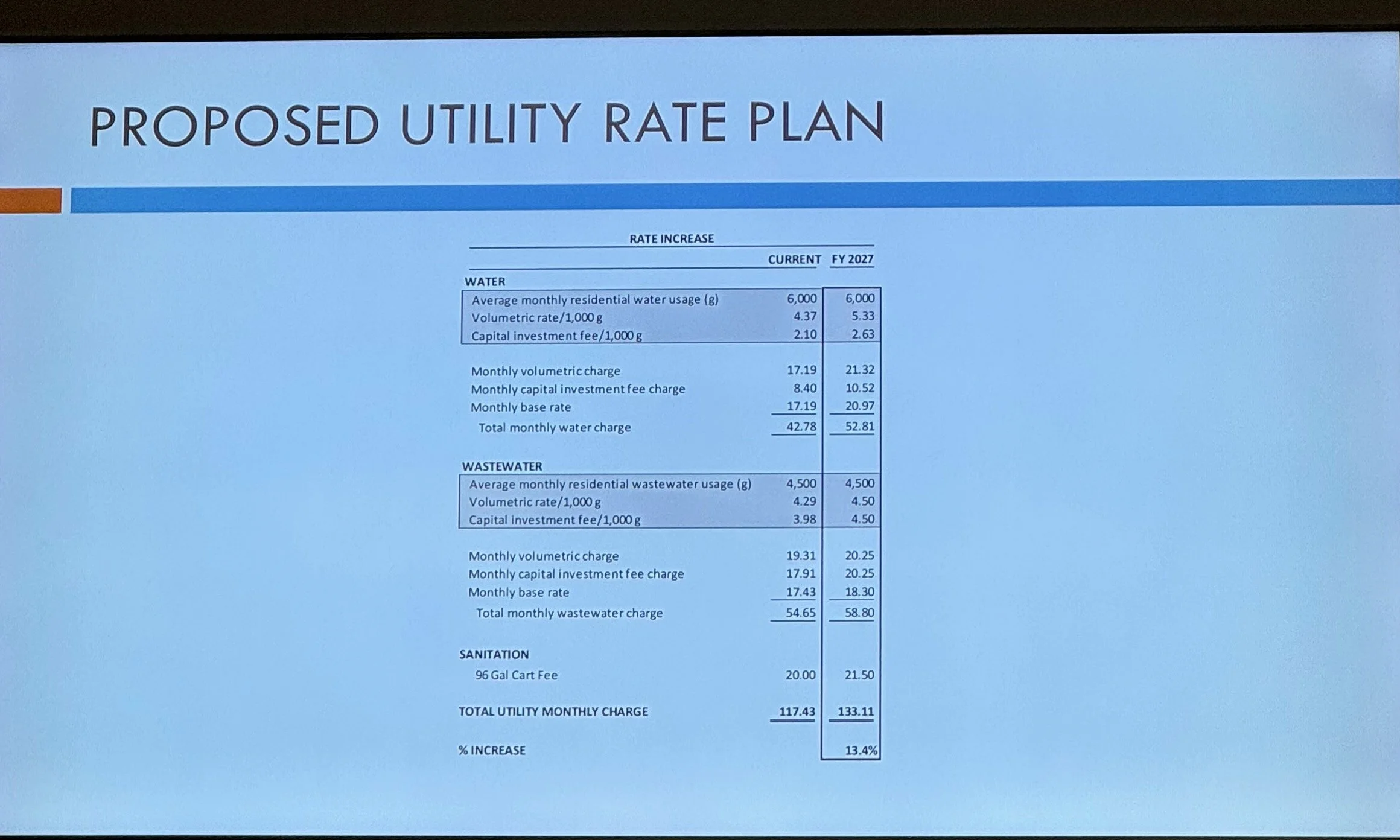
A slide shown during the April 21, 2026 budget workshop showing proposed utility rate changes.
Andy Dossett | The Wiley Post
Why are rates going up again?
In a frustrating bit of irony, one reason rates are rising is because Bartlesville residents are using less water.
After the second-worst drought in recorded history, city officials spent years encouraging conservation through policy changes. They changed rate structures to discourage heavy water use, charging more per gallon as usage increased.
And it worked.
People used less water.
That's good for sustainability and the environment.
It is not so great for the city's finances.
For years, Bartlesville operated under what officials described as a "conservation-first" model. Heavy users effectively subsidized lower-use customers through higher tiered rates. But now, with overall water usage down, the city is not bringing in as much revenue as projected.
At the same time, costs have climbed.
The city said earlier rate studies assumed inflation around 4% annually. In reality, some years have seen closer to 10%. Officials also cited rising supply costs, tariffs and increasing state and federal regulations — especially for wastewater treatment.
The result: It costs more to produce drinking water and more to treat it after it goes down the drain.
So, in simple terms, residents conserved water, the city sold less water, and now the city says it needs to charge more.
State regulations are eating into budgets
A major reason rates continue to rise is the cost of overhauling Bartlesville's aging wastewater system.
The Chickasaw Wastewater Treatment Plant — the city's only wastewater treatment facility — dates back to the 1930s and is now undergoing a massive modernization project required by the Oklahoma Department of Environmental Quality.
And the price tag keeps climbing. In 2022, the project was estimated to cost about $55 million. By 2024, that estimate had increased to $65 million. Now, city officials said the cost has ballooned to more than $80 million.
Planners designed the upgrades to do more than just replace aging infrastructure.
The project will increase the plant's daily treatment capacity from 7 million gallons to 8.2 million gallons per day and add water reuse technologies to improve long-term sustainability.
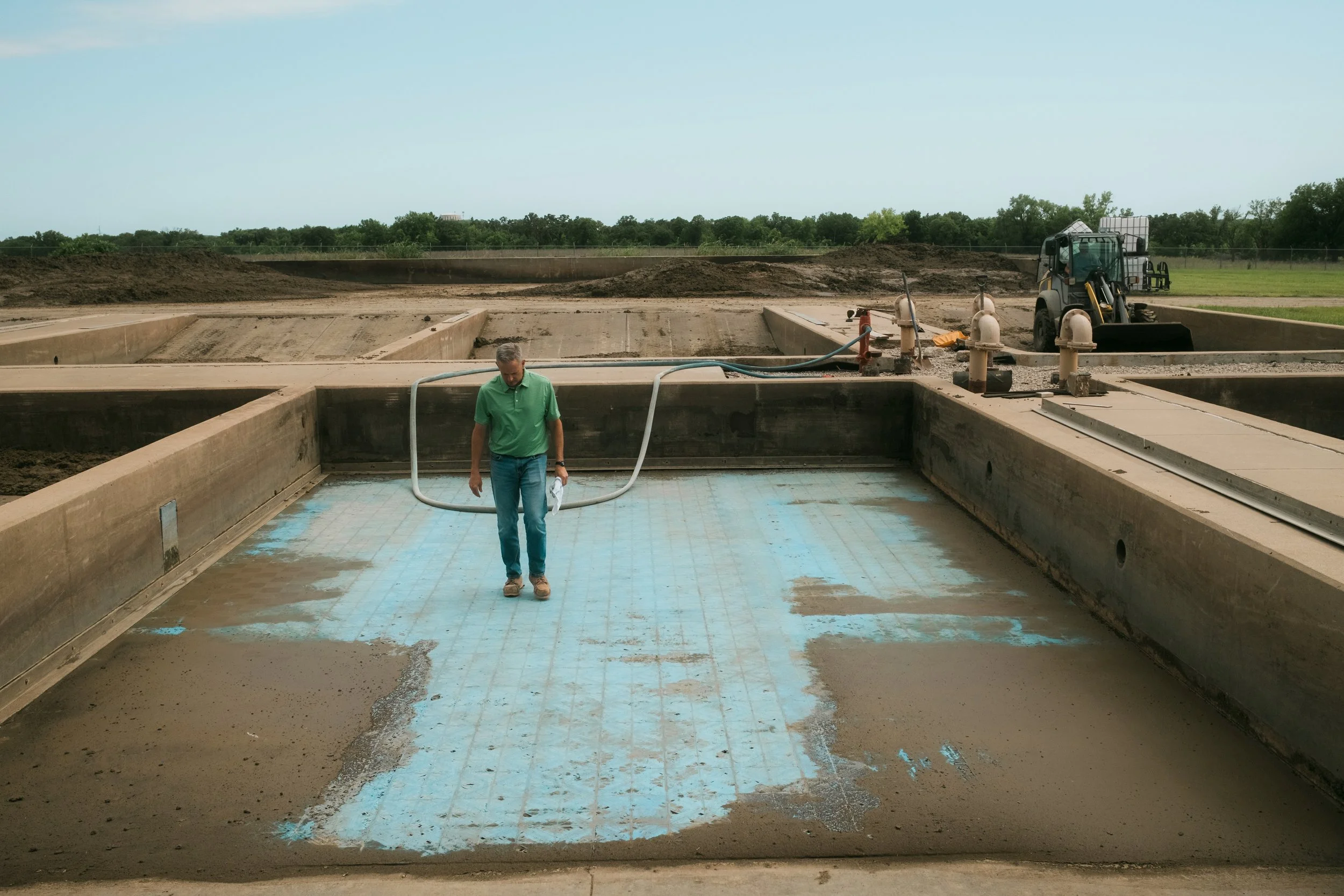
Water Utilities Director Terry Lauritsen gives a tour the Bartlesville water treatment plant on June 6, 2024.
Andy Dossett | The Wiley Post
But one of the biggest improvements may come during storms and heavy rain.
The upgraded system will increase "wet weather" processing capacity from 12 million gallons per day to more than 20 million gallons per day, helping prevent overflows and better handle spikes in wastewater volume during severe weather.
Water Utilities Director Terry Lauritsen said the upgrades are not optional.
And because the work is required by regulators and financed over time, those costs are increasingly showing up on customers' utility bills.
The base-rate problem
City Manager Mike Bailey told the council the city historically set monthly base utility charges below sustainability. The city made up the difference by charging more based on usage, a "you use it, you pay for it” model.
That model works — until usage drops.
Now, city leaders are considering balancing more of the burden onto fixed monthly fees to create a more predictable revenue stream.
That means even residents who carefully conserve water will see higher bills.
City councilors Larry East and Aaron Kirkpatrick both noted that while an extra $15 a month may be manageable for some families, for others it could be the difference between getting by and falling behind.
The councilors raised concerns about America's growing affordability crisis — and they are not wrong.
Even though inflation has cooled from its 2022 peak, prices remain significantly higher than they were just a few years ago, according to the U.S. Bureau of Labor Statistics,
The same data shows consumer prices are up roughly 20% since 2020, with some essentials climbing even faster. Grocery prices have increased about 25% in that time, while insurance, rent and utility costs have also continued to rise anywhere from 30% to 50%.
For residents already living paycheck to paycheck or on fixed incomes, one more increase — even a relatively small one — can hit hard.
Kirkpatrick said he understands the need for an increase, but worries the cycle may repeat itself. He called it a "sinkflation" issue.
During the meeting, he cautioned that if rates rise too high, customers may use even less water to save money. And if usage drops even more, the city may again face a shortfall and revisit rates.
In other words: Raise rates, reduce use, lose revenue, raise rates again. Rinse and repeat.
Council members asked how other cities are dealing with the same issue.
Bailey's answer was blunt: many aren't.
He said other municipalities are often managing utility finances "by crisis" rather than planning ahead.
Bartlesville leaders said they are trying to stay ahead of future financial and infrastructure needs rather than waiting for emergencies.
Still, being proactive doesn't make the increase easier to swallow.
Will this keep happening?
While these rate increases aren't set in stone and need to be approved by a vote of the council in June, the answer is that residents should expect water rates to go up every year for the next five years.
How much? That is not known.
Bailey said if the council approves this larger upfront increase now, forecasts suggest the city may avoid larger increases in years two through five of the next rate cycle.
That is the hope.
But as the council's discussion showed Tuesday, there are no guarantees.
Inflation remains unpredictable. Regulations can change. Usage patterns can shift.
And in Bartlesville, water bills may continue to rise — even when water use falls.
For residents trying to budget, the message from Tuesday's meeting was simple: Use less, pay more anyway.
Have a tip about this story? Email staff@thewileypost.com