
Aaron Kirkpatrick
Incumbent for Bartlesville Ward 4
Bio
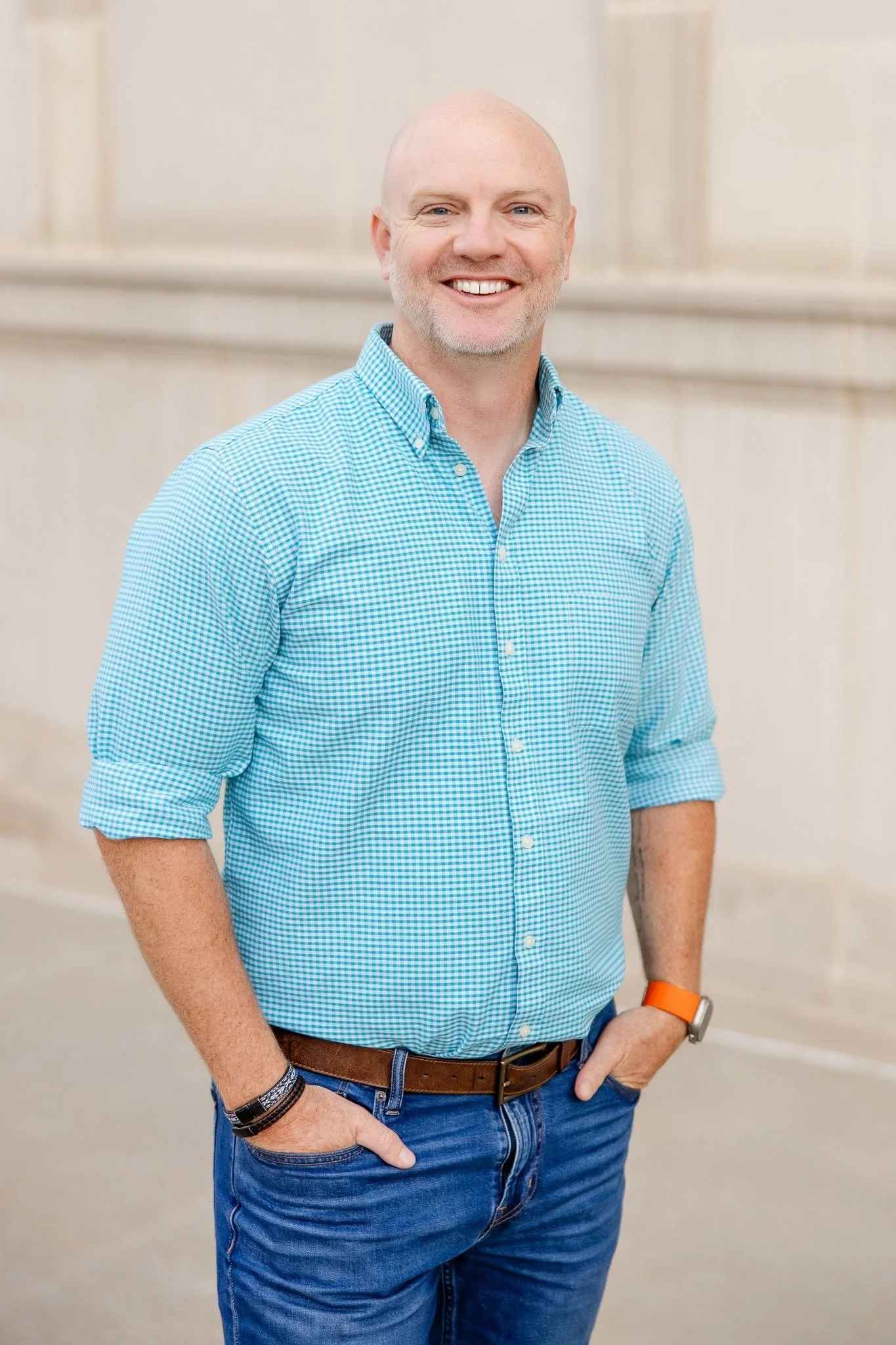
I am the Bartlesville City Council Rep for Ward 4. I was elected in 2024, and I’m working to serve my neighbors in Bartlesville. My family has lived here for over a decade, and we love our oasis on the prairie! I am a pastor, business owner, entrepreneur, and city council member, and in all those things I’m passionate about building a strong community, finding practical ways to get things done, and connecting people.
I’m working hard to make sure Bartlesville is a thriving environment for everyone who calls our town home. Let’s keep building on what makes Bartlesville special and create a future we can all be excited about!
1. Why are you running
Why are you running for Bartlesville City Council, and what experience or perspective do you believe you would bring to the council?
Bartlesville is an amazing town, and I hope my neighbors will let me continue using my gifts and strengths to make it even better! Whether it is tackling big challenges like homelessness or individual needs like sidewalk repair or easement questions, I have truly enjoyed serving our community as a council member for the past two years. I enjoy bringing people together, finding practical solutions to difficult problems, and communicating openly with the people I represent. I have used these strengths to serve our community, and I hope to continue doing so. However long my neighbors in Ward 4 allow me to serve, my goal is always to leave Bartlesville better than I found it!
2. Your top priorities
What are the three most important issues facing Bartlesville during the next five years? What specific actions should the City Council take to address them?
Water Security will continue to be a top issue for Bartlesville for the foreseeable future. As we continue to experience cycles of drought, we must be intentional with every gallon we have. Additionally, it often takes a literal act of Congress for us to make progress, so making the necessary changes can be an excruciatingly slow process. The good news is that our local, state, and federal representatives have been working on this issue for over 20 years, and Bartlesville is significantly ahead of most other communities in Oklahoma. This means we are building on a solid foundation to make things better, not responding to a crisis.
Because of conservation-focused planning, we have been able to weather multiple droughts in the past few years without seeing our reservoir dip to concerning levels. We also have an emergency water-reuse facility in place. We have not had to use it, but it is there if we need it. Even though we are in a better place than we were in the early 2000s, we still have some key areas to address.
First, we have an opportunity to negotiate with the Town of Copan to purchase a portion of its water-storage rights at Lake Copan. The federal government recently gave us this opportunity, and completing those negotiations would give us a third water source outside of the Caney River and Hulah Lake.
Second, we need to continually lobby our federal representatives to dredge Hulah Lake. It is an expensive and complex process, but I believe it will eventually become necessary. All of our man-made lakes are silting in, and we have already lost a significant amount of water-storage capacity at Hulah. We are currently asking the federal government to raise the allowable water level so we can store more water, but we must also address the silt that already exists.
My concern is that the Corps of Engineers will wait until we have a true crisis before seriously considering dredging. By then, it will be significantly harder and more expensive. If we can begin that process sooner rather than later, we can make important progress toward our goal of 100-year water security.
Housing
Bartlesville needs more housing of all types, and we need it quickly. Obviously, the city does not need to be in the business of building houses. What we CAN do is make it easier for people to build new housing and restore what we already have. I have been working on both with city staff and community partners.
First, we have approved a program that will enable the city to license pre-approved housing plans for people who want to build. These plans will be designed by an architectural firm to match the style of the neighborhoods where they are built. People will be able to receive these pre-approved plans from the city for free, significantly reducing the cost of designing and building a house, duplex, triplex, or apartment building. It should also help projects move through the process more quickly because much of the design work will already be completed and approved.
Second, I am working on a program called “Rebuild Capitol Hill,” which will help revitalize our aging housing downtown. Capitol Hill is Bartlesville’s historic downtown neighborhood, north of 12th Street between the Caney River and the railroad tracks. Many of its homes are nearly 100 years old, and rising costs have made major repairs harder and harder for homeowners to afford. At the same time, nearly one-third of the neighborhood’s housing units are vacant, even while Bartlesville needs more housing.
Rebuild Capitol Hill would help people repair the home they already love, purchase and restore a home of their own, build on vacant property, or bring an empty house back to life as a rental. By helping close the financial gap that often makes these projects financially unfeasible, we can make housing more attainable for individual families while also putting more homes back into use for the entire community.
The Rebuild Capitol Hill plan would build upon existing programs overseen by the Bartlesville Redevelopment Trust Authority (BRTA). Our goal is to make funds easier to access, cut unnecessary red tape, and maximize their impact by multiplying public funds with private investment. We expect these programs to generate $6–10 million in new investment in the neighborhood.
The BRTA funds came from property taxes generated within that neighborhood and are required to be reinvested there. That is exciting because it gives us an opportunity to use those dollars to directly benefit the neighborhood that generated them while also benefiting Bartlesville as a whole. Bringing vacant homes back into use will increase our housing supply, and we estimate that the resulting property improvements could eventually generate approximately $100,000 in additional property-tax revenue each year for our schools, county services, Tri County Tech, and other taxing entities.
This investment can also be an important step toward increasing investment south and west of downtown as we look toward the long-term revitalization of Bartlesville’s west side. By making it easier to buy, build, or restore housing in Bartlesville, the entire community benefits over time.
Economic Development
Whether you are an independent gig worker, a small business owner, a large corporation, an employee, or someone looking for a job, we all benefit when our economy grows. Bartlesville spent a decade recovering after some of our largest employers moved their primary operations out of town. During that same decade, we kept investing in the infrastructure that would allow us to diversify our economy, support growing businesses, and bring new employers to town.
As a result of that investment, we have seen a rise in good-paying jobs in manufacturing, aerospace, oil and gas, and energy storage. We have seen new restaurants and retailers move to Bartlesville, and we have seen an explosion of new shopping, dining, and entertainment options downtown as well.
Every single new business is a win for Bartlesville, and we must continue investing in the infrastructure that will help us grow over the next decade. Through our partnership with the Bartlesville Development Authority, the City of Bartlesville is investing in new hangars at the municipal airport and new warehouse space in the east side industrial park, while also looking at creative initiatives to support our growing local businesses.
Visit Bartlesville continues to grow our tourism sector, which brings millions of dollars into Bartlesville each year. They have also connected Bartlesville to the film industry, creating yet another source of local economic growth.
Of course, economic growth goes hand in hand with education. Bartlesville High School and Tri County Tech are preparing students and adult learners with the skills they need to enter our growing and evolving workforce.
Bartlesville is booming right now. Economic development must continue to be one of our highest priorities so that Bartlesville can continue to grow and prosper into the future.
3. Endeavor 2045
Bartlesville adopted the Endeavor 2045 comprehensive plan following a community planning process. Which parts of the plan should receive the highest priority during your term, and are there portions you believe should be changed, delayed or reconsidered?
Housing and economic development feature heavily in Endeavor 2045, and I have already touched upon them. With that in mind, one other piece of the plan that deserves our long-term commitment is the redevelopment of Bartlesville’s West Side.
The West Side has a rich history that is unique to Bartlesville. It has been a center of industry and innovation, it is our nonprofit hub, and it is the front door for everyone traveling to Bartlesville from the west. Endeavor 2045 highlights the opportunity for both business and residential investment on the West Side, and I want to see the next decade become a time of revitalization and beautification for the businesses and neighborhoods west of the railroad tracks.
The Bartlesville Cultural Center has been gathering organizations and groups of people who are exploring what that revitalization could look like, and I have been blessed to listen to their vision. Below are a few of my own observations.
First, many of our new employers are establishing themselves on the West Side. That creates opportunities for entrepreneurs and existing businesses to serve a growing workforce while also giving West Side residents access to new, high-quality jobs close to home.
Second, Adams, Frank Phillips, and Hensley can all benefit from beautification. Four of the five main entrances to Bartlesville are industrial, and the West Side’s industrial corridor is the oldest. As new employers and employees move into the area, we should take advantage of this opportunity to make the West Side a more attractive entrance to Bartlesville. As a member of the Keep Bartlesville Beautiful committee, I am happy to say we are actively working on new ways to beautify that part of town.
Finally, as this development and beautification take place, I would like to see the West Side clearly communicate its rich history and unique story. This has been a major theme of the Cultural Center’s sessions, and it features heavily in the Endeavor plan as well. When cities are intentional about displaying and communicating what makes different parts of town special, that uniqueness can become an attraction of its own. I want us to invest in the West Side without erasing what makes it distinctive, creating another part of Bartlesville that people are excited to visit, invest in, and call home.
I also view Endeavor 2045 as a long-term guide, not a rigid checklist. Our needs, opportunities, technology, and financial realities will change over the next 20 years, and individual recommendations should be reevaluated as circumstances change. But its broader goals of expanding housing, strengthening our economy, and revitalizing areas that have historically received less investment are priorities I strongly support.
4. Jobs and economic development
Bartlesville has long depended on major employers including Phillips 66 and ConocoPhillips. What should the city do to diversify the local economy, attract employers and create or retain well-paying jobs? What role should the Bartlesville Development Authority and Chamber of Commerce play?
I addressed many of these priorities above, including our partnership with the BDA and the infrastructure investments we are making to support continued economic growth. So let me instead share some of the success we have already had in doing exactly what this question asks:
Our new and growing primary employers have announced 600 new primary jobs in the last 4 years.
Over 150 new residents have taken advantage of the Resident Recruitment Program. That means people have chosen to live, work, and play in Bartlesville instead of Owasso, Collinsville, Tulsa, or somewhere else.
Lincoln Electric, who is still new to Bartlesville, outperformed their out-of-state headquarters for the first time this year. They already employ 150 people, and they are planning to expand.
Bartlesville has become the de-facto headquarters for Blue Whale Materials. They started with a plan to employ 200 people in their single facility, and they are also already expanding.
Our downtown businesses are thriving, and there has been a noticeable increase in the number of people spending their evenings and weekends downtown. It’s hard to quantify a vibe, but downtown’s vibe has gotten way cooler.
Our hospital, Ascension St. John, has recently come under new leadership, and things are improving there as well. As another of our major employers, the hospital is bringing in new services, doctors, and specialties while improving patient outcomes and satisfaction.
That’s all excellent news, but we’re not done. We need to continue attracting new employers, supporting local businesses, and creating good-paying jobs for Bartians.
When Phillips 66 and ConocoPhillips relocated their headquarters, it created an economic challenge for Bartlesville. But it also created something of an identity crisis. It can be tempting to measure today’s Bartlesville against what we used to be. I think we should be excited about what we are becoming.
We still have great relationships with Phillips 66 and ConocoPhillips as major employers and community partners, AND we have added a host of new employers at the same time. Our economy is growing, our community is improving, and by diversifying our employment base, we are building a healthier, wealthier, more resilient Bartlesville.
5. City spending and taxes
When balancing the city budget, where do you believe Bartlesville should spend more, spend less or maintain current spending? Are there city services or programs you would eliminate or significantly reduce?
Bartlesville’s city budget is fiscally conservative and responsible. By the time the budget reaches the City Council, each department has spent countless hours lining out its needs, priorities, and goals. Then, they often have to make significant cuts. They are extremely effective at stretching every dollar, and as a result, we are the envy of many similarly sized municipalities. As a new member of the Council, I was deeply impressed by our city’s well-run finances, and two years later, I still am.
Part of the budget process involves the Council weighing in on the priorities we’re hearing from our constituents and then making hard decisions about what gets cut to make room for them. We have made a few changes each year, but I believe it is best practice for us to be extremely careful when doing so. The best approach is to communicate the city’s emerging needs well before the budget process starts so city staff can keep that direction in mind as they develop their own priorities and projects.
With that background, here are a few things that are always at the top of my priorities:
Infrastructure investment is the single most important thing the city does. We must always be improving roads, drainage, water treatment, sidewalks, and other essential infrastructure. If these things fail, the city can literally fall apart. Every dollar the city invests in infrastructure also supports economic activity and quality of life. I have pushed hard to make sure we keep investing heavily in these things, and I will continue doing so.
Shared spaces like our public parks, Pathfinder Parkway, Unity Square, and the library are essential public goods. Every improvement we make to these shared spaces creates another opportunity for people to connect, make friends, enjoy the outdoors, and take pride in Bartlesville. When you travel, you can immediately feel the difference between towns that invest in their shared spaces and those that do not. These investments are money well spent.
Happy, well-paid employees are the cornerstone of an improving Bartlesville. Our employees are the reason our water works, our trash is picked up, the grass at the park is mowed, the potholes get filled, fires get put out, missing children are found, snow gets cleared, and a million other essential services are done quickly and professionally. I am happy to continue investing in the well-being of our employees, and I appreciate the work they do.
At this point, I do not see a city service or program that I believe should be eliminated or significantly reduced. That does not mean every expenditure should automatically continue forever. The Council should constantly evaluate whether taxpayer dollars are producing results and whether priorities have changed. But after two years of working through our budget process, I believe Bartlesville operates a lean and responsible city government, and I would be very cautious about cutting services simply for the sake of saying we cut spending.
6. Public safety cameras and privacy
What is your position on Bartlesville's use of automated license plate reader cameras? How should the city balance law enforcement benefits with residents' concerns about privacy, data retention and government surveillance?
I personally don’t like automated license plate reader cameras. If I were choosing for myself, I would get rid of them. But after hundreds of conversations, I have to be honest that my neighbors want them. I’m elected to represent them, and I have voted against my own preference to represent their preference.
I also must be honest that they are effective. Our police department has used these cameras to gather timely evidence that has led to saving missing children, helping elderly people with dementia, recovering stolen vehicles, finding murder suspects, and breaking up organized theft rings.
With that said, I believe we have found a responsible balance between two legitimate community priorities: privacy and public safety. We want law enforcement to have effective tools to solve crimes and locate stolen vehicles, missing children, and other public safety alerts, while also protecting residents from unnecessary government surveillance. We don’t have to choose one or the other.
Bartlesville has adopted unique regulations designed to create what I call a “bubble of privacy” inside our community. Our cameras are only located on the outskirts of town and face inward. That means Bartians can live, work, shop, and travel around town without routinely passing our cameras, and they can leave Bartlesville without being photographed. The cameras capture license plates entering the city, allowing police to receive alerts when a vehicle they are looking for enters Bartlesville. Even then, officers must locate the vehicle and visually confirm it before taking further action.
We have also built strong safeguards against abuse. Only dispatchers and command officers have direct access to the network, and our regulations require a monthly public audit showing who accessed the system, how often, and why. For two years, our Police Department has been exemplary in following these policies. We have also pushed ALPR companies to develop automated auditing technology that can identify suspicious searches and potential misuse.
Some residents strongly oppose this technology, and I take those concerns seriously. Others would like us to install more cameras, which we have chosen not to do. Meanwhile, our Police Department reports that the cameras we already have are helping solve crimes. I believe our current policy threads the needle by maximizing the public-safety benefits while minimizing how often ordinary Bartians’ vehicles are photographed, all while creating strong accountability for those entrusted with the technology. If our department abuses the system, I will support taking the cameras down. And if the law, technology, public sentiment, or relevant information changes, we should reevaluate our policy. For now, I believe the balance we have created works well for Bartlesville.
7. City manager and council roles
What do you believe is the proper relationship between the City Council and city manager? Where should council oversight end and the city manager's authority over day-to-day operations begin?
The City Council and city manager’s relationship is a matter of law, not a matter of opinion. Bartlesville’s City Charter and Oklahoma law establish a council-manager form of government that intentionally separates policymaking from the day-to-day administration of the City.
The City Council is the governing and legislative body. We pass ordinances, adopt the budget, establish policies, set priorities, and ultimately hire and oversee the city manager. The city manager is the City’s chief executive and administrative officer. The manager oversees city departments and employees and is responsible for implementing the policies and priorities established by the Council.
That means Council oversight should be strong, but it should be exercised at the appropriate level. We should ask hard questions, establish measurable expectations, scrutinize spending and performance, and hold the city manager accountable for the overall operation of the organization. If something is not working, it is absolutely our responsibility to address it with the manager.
What individual council members should not do is bypass the city manager and begin functioning as supervisors of individual employees. We should not be deciding who gets hired or fired within departments, directing employees in their daily work, or attempting to personally manage city operations. Those responsibilities belong to the city manager and the professional staff who report through that office.
There is an important reason for that separation. Five independently elected council members trying to manage hundreds of employees would create confusion, competing directions, and a highly politicized workplace. Instead, the voters hold the Council accountable for the direction of the City, and the Council holds the city manager accountable for managing the organization that carries out that direction.
In its simplest form: the Council sets the destination and holds the manager accountable for getting us there. The city manager steers the ship and oversees the crew that keeps the ship sailing and gets us where we’re going. It is not always an easy balance, but it has benefitted Bartlesville for decades.
For more information about the candidate, please find the links below
Editor’s Note: The Wiley Post provided every candidate with the same questions, deadline and opportunity to participate. Candidate responses are published exactly as submitted and have not been edited for spelling, grammar, clarity, length or content.
To ensure fairness, once the voter guide is published, no late responses, revisions or additional candidate statements will be accepted. This ensures no candidate can change an answer or submit responses after reviewing another candidate's published answers.