
Bartlesville needs more child care, but providers can't make the numbers work
Kimberly van Veen | The Wiley Post
Oct 28. 2026
Bartlesville has lost 200 child care spots in four years.
Parents are struggling to find care; providers say they can't afford to expand and some operators are barely keeping their businesses open amid reduced state child care subsidies and thin profits in a tight economy.
Kimberly van Veen | The Wiley Post
Between 2022 and 2026, those child care spots were lost, according to Tara Gotwalt, deputy superintendent at Tri County Tech. Bartlesville now has 41 providers, including 21 centers and 20 home-based day cares.
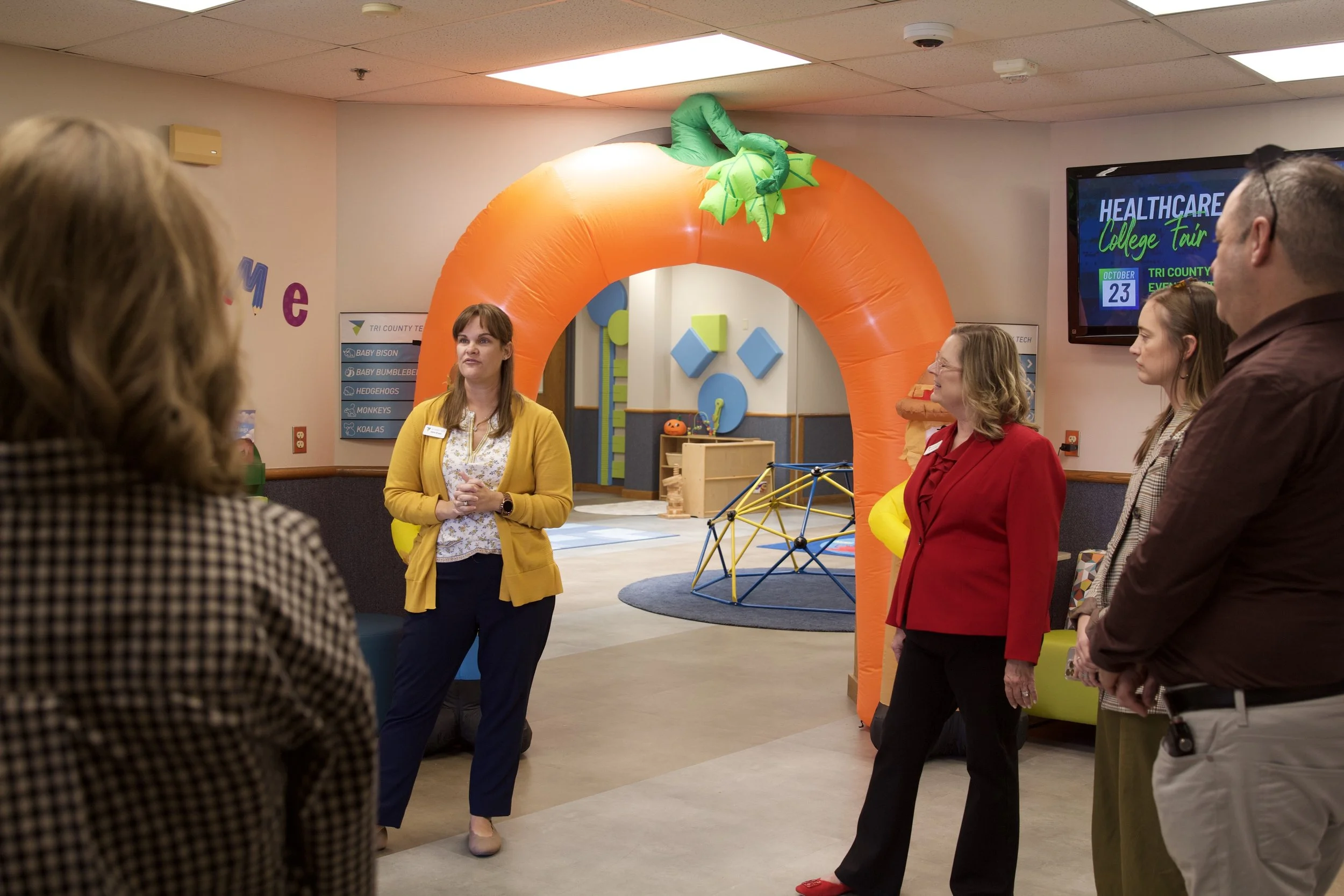
Community leaders convened Monday, Oct. 19, to assess the shortage and discuss solutions to what Gotwalt called a "crisis."
Bartlesville Community Foundation President Laura Jensen and Gotwalt, who previously served as early care and education teaching director at Tri County Tech, conceived the summit.
The group toured three child care operations facing different challenges: a training center at Tri County Tech, a private-pay home-based nature school and a child care center that accepts state subsidies.
Together, the three facilities offered a look at the challenges facing child care providers — from training enough workers to keeping existing businesses open and finding the resources to expand.
Training child care workers while families wait for openings
The group started at Tri County Tech's Early Learning Lab, led by Director Jolene Bryant. The lab cares for children while training future child care workers. Tech students can earn a Child Development Associate credential, which qualifies them as teachers in most child care centers.
The Early Learning Lab currently serves 69 children, but its waiting list exceeds 200. Only seven children receive state subsidies for care. Monthly tuition ranges from $770 to $860 per child, depending on age.
The lab mainly serves Tri County Tech staff and Bartlesville public school teachers, who pay half price through a partnership with the Bartlesville Public Schools Foundation. The foundation pays the rest, an incentive intended to address the teacher shortage.
While the Early Learning Lab can't serve everyone, it helps other daycares win funding and meet regulations while training early childhood teachers.
Bryant described two new Phillips 66 research center hires from out of state who hesitated to accept jobs without child care in place. Bryant mobilized her network to find places for the children and urged the parents to prepay to hold their spots.
The shortage affects more than families. Without reliable child care, employers can struggle to recruit the workers they need.
And while training more child care workers is part of the solution, keeping experienced providers in business is another challenge.
RELATED COVERAGE
Bartlesville child care shortage grows as centers closeRead our earlier reporting on child care closures and the growing shortage of available care in Bartlesville.
After 28 years, a child care provider struggles to stay open
The tour next stopped at Explorations Child Care and Nature School, where owner Careese Hallet has transformed her backyard into a child's paradise.
Hallet and her daughter care for 12 children at the home-based program. Children move between art projects, a science station, balance bikes, slides and a sandbox — all outdoors.
Hallet charges $900 per month per child, but as costs have risen, she has cut extras like field trips and food. She loves her work, which she has done for 28 years, but is just one catastrophe away from closing.
"One day you are ok, and the next you aren't," Hallet said.
The business leaves no cushion for major repairs or upgrades. She can't afford to replace the roof. Pandemic-era state help paid for a driveway replacement, but she won't be able to do that again when daily parent traffic grinds it down.
SUPPORT LOCAL JOURNALISM
Support The Wiley Post's mission
Become a subscriber today and help sustain independent journalism that keeps our community informed, holds leaders accountable, and tells the stories that matter.
Become a subscriberHallet doesn't have health care or retirement benefits through the business, so she feels she's sacrificed herself so others can work, with nothing saved for herself.
Hallet warns that the system has to change before providers like her disappear. She fears too few trained providers can keep pace with demand.
In an open letter to the governor posted on Facebook this year, Hallet wrote, "Until early childhood educators are valued in practice — not just in policy language — the system will continue to strain under impossible expectations, and the children it was designed to serve will pay the price."
For larger centers, the financial pressures look different, but the result is much the same: Even when families need more care, expansion can be too risky.
Families need more child care. The cost of expanding is too high.
Firm Foundation Child Development Center, which accepts state child care subsidies, was the final stop on the tour.
The center enrolls 48 children. Owners Ben and Lindsey Thomas want to expand but can't.
"It would be foolish from a business perspective," Ben Thomas said.
He expects state child care subsidies to shrink as the state scales back social assistance, leaving fewer families eligible for help. More than 60% of the children at Firm Foundation rely on subsidies to pay for day care.
The center receives subsidy payments based on daily attendance, and those payments often arrive three weeks late.
Oklahoma Human Services ended a pandemic-era $5-per-day child care payment supplement in April. Additional changes to families' income eligibility for subsidies, originally scheduled for October, have been delayed until February 2027.
Lindsey Thomas previously operated a day care in Kansas, where she said the system was straightforward. Parents obtained funds from the state and paid her directly, rather than through Oklahoma's hybrid system.
In Oklahoma, the center must track attendance to receive payment from the state. If children miss too many days or parents don't sign them in, the center doesn't get paid.
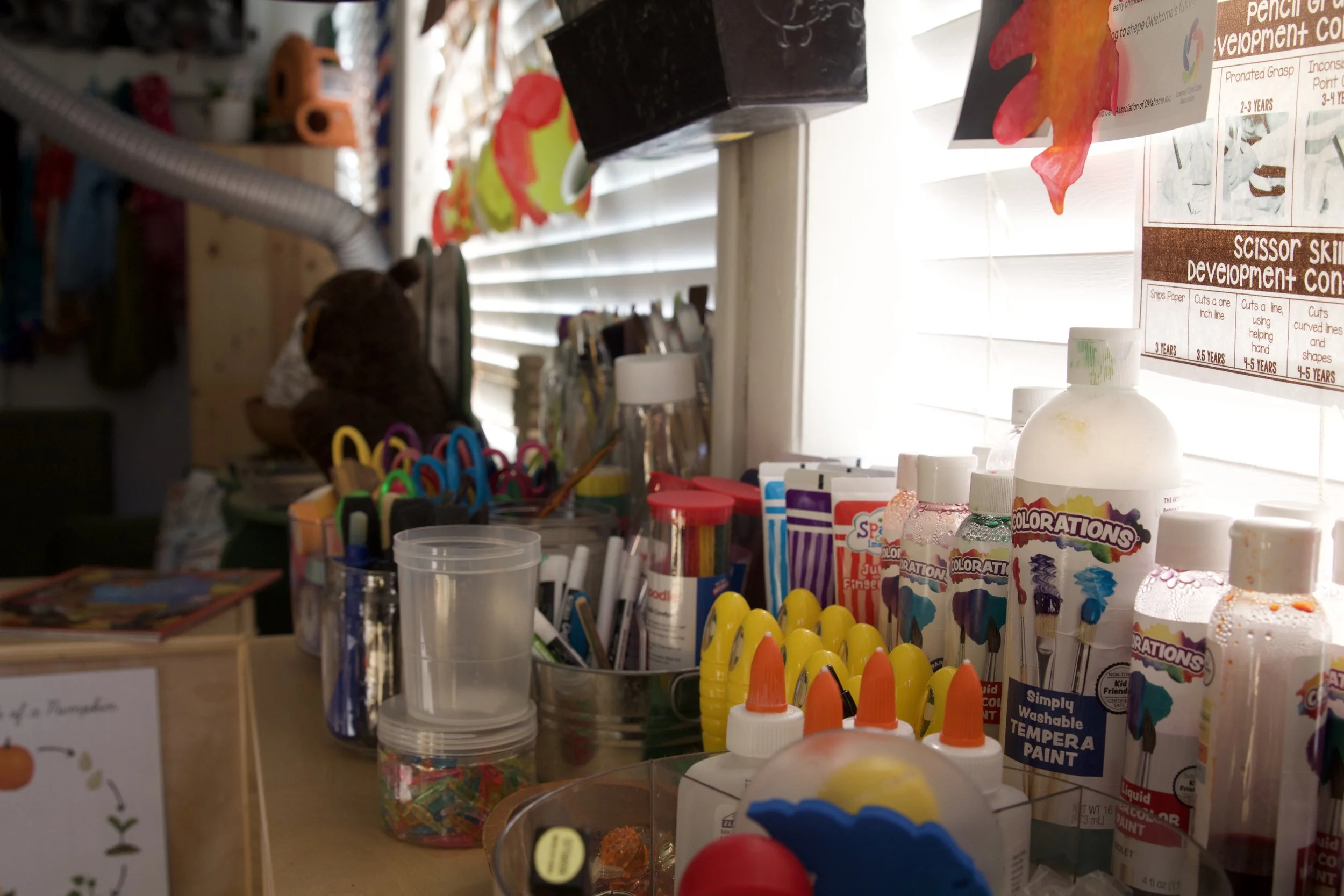
Regulations consume hours of Lindsey's week. She pulled out three binders packed with paperwork she had to file. She also paid for a national certification on top of Oklahoma Human Services certification.
Kimberly van Veen | The Wiley Post
The Thomases priced two buildings near their existing facility, but the numbers don't work. One building's rent is too high. The other, the former Kiddie Korner building, would need extensive renovations, and the Thomases can't afford to take that on.
Ben Thomas proposed that the city could buy a building and rent it back to Firm Foundation, shielding the center from some of the risk while allowing it to add more child care space in Bartlesville.
"Being a child care owner in Oklahoma right now is scary," Lindsey Thomas said, citing rules, regulations, risks, uncertainty and rising costs.
But she stays on for the people.
"Our teachers are some of the most loving, caring people I have ever known," she said.
Firm Foundation has built a family feeling among its employees. Teachers come in on days off to work on their classrooms or surprise children with new toys. The Thomases elected to give all their staff a paid week off after Christmas each year, even though they forfeit a week of revenue.
They want to offer benefits but can't afford them.
"Our staff does not get paid enough for what they do," Lindsey Thomas said.
What will it take to create more child care spots in Bartlesville?
That's the workforce problem state Rep. Suzanne Schreiber described at the summit. She framed child care as an economic issue, arguing that it sustains the workforce and that the state should back it the way it has backed oil and gas.
The bottom line, Schreiber said, is that child care is a human-centered business.
The challenge is that parents need affordable care, while providers must charge enough to cover rising costs, pay their employees and keep their facilities open.
The Child Care Task Force will continue looking for solutions.
"It's critical that we support safe care," Jensen said. "We have to support providers."
For Ben Thomas, the stakes extend beyond whether his center can afford to expand.
"I worry about what's going to happen to the kids and families who don't have care," he said.
You made it to the end. Thank you for reading. We believe local news should be available to everyone, not hidden behind a paywall. Readers who support The Wiley Post help us keep it that way. Please consider joining them.