
Why Copan is under another boil order and what its 2025 water report shows
Tim Hudson and Andy Dossett | The Wiley Post
Sept 16, 2026
Copan Public Works Authority customers remain under a mandatory boil order after a power failure led to high turbidity and inadequate treatment in the drinking water system.
The order, issued Sept. 11, also applies to Washington County Rural Water District No. 7 and Osage County Rural Water District No. 20, which purchase water from Copan PWA.
The Oklahoma Department of Environmental Quality said it issued the order because of high turbidity and low disinfectant levels. As of Sept. 16, DEQ continued to list the Copan boil order on its website.
Customers should not drink the water without boiling it first.
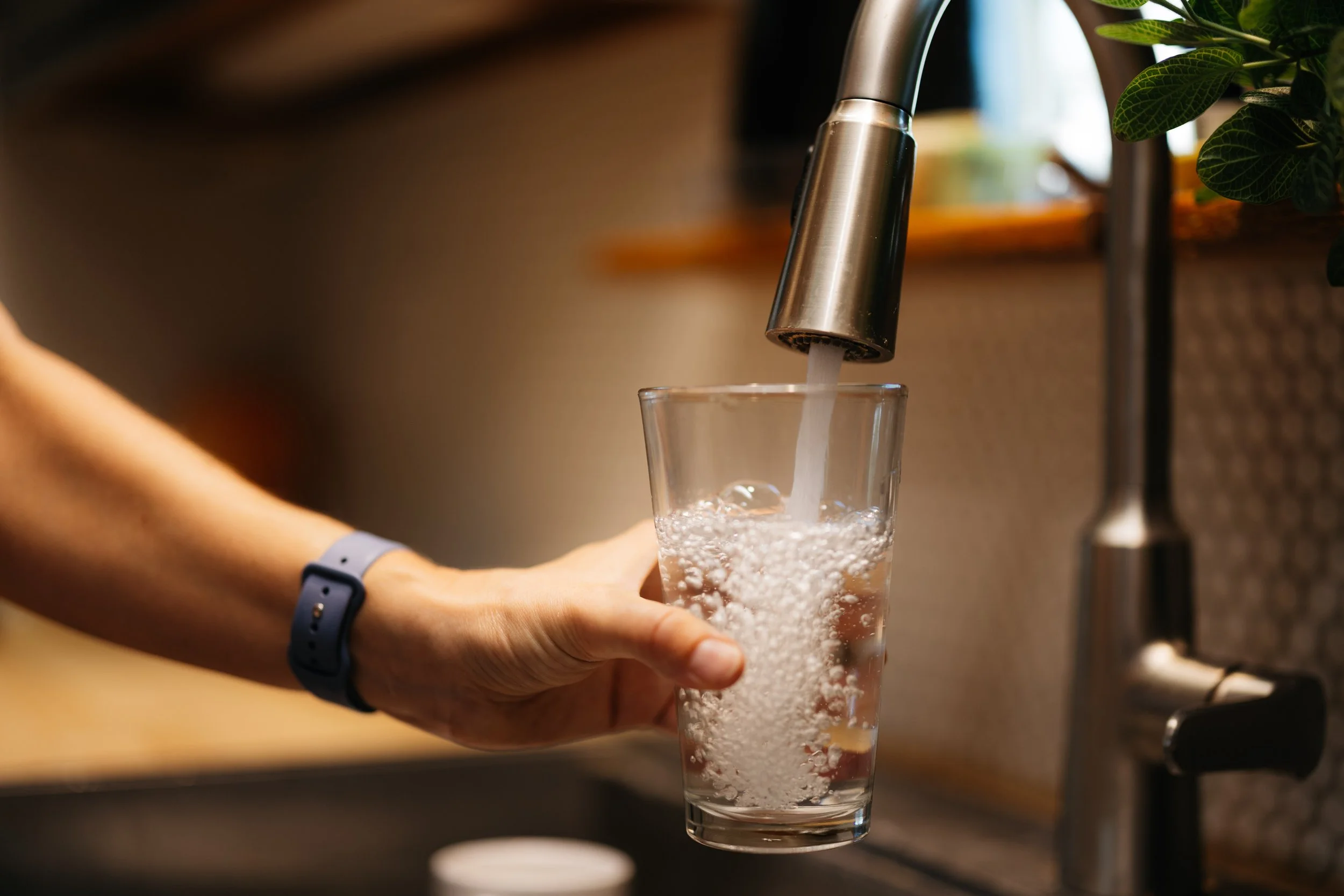
Customers of Copan PWA, Washington County Rural Water District No. 7 and Osage County Rural Water District No. 20 are under a mandatory boil order.
Andg\y Dossett | The Wiley Post
"Bring water to a full, rolling boil for one minute before drinking, preparing food, making baby formula, making ice, brushing teeth, washing dishes, bathing infants who may drink bath water, or for cleaning open wounds," the notice states. "Boiling kills bacteria and other disease-causing agents."
Customers can instead use bottled water or another acceptable source for consumption.
The notice states that a power failure at the lake intake structure and water treatment facility caused a high volume of particles to enter the system, resulting in high turbidity. The utility also reported inadequate water treatment.
Turbidity measures cloudiness in water. Copan PWA must routinely monitor turbidity to determine whether the water supply is being effectively filtered.
Water samples taken Sept. 11 showed turbidity levels as high as 3.5 nephelometric turbidity units, or NTU, above the 1 NTU standard cited in the notice.
"Additionally, our water treatment plant is currently providing an inadequate water treatment process," the notice states. "Because of these high levels of turbidity and inadequate water treatment, there is an increased chance that the water may contain disease-causing organisms."
The notice says turbidity itself has no direct health effects but can interfere with disinfection and provide a medium for microbial growth. It can also indicate the presence of disease-causing organisms, including bacteria, viruses and parasites, which may cause nausea, cramps, diarrhea and associated headaches.
People experiencing persistent symptoms may want to seek medical advice, according to the notice. People with severely compromised immune systems, infants and some older adults may be at increased risk and should seek advice from their health care providers about drinking water.
The utility said it was backwashing filters as frequently as possible and continuing daily flushing. Customers will be notified when turbidity returns to acceptable levels and boiling water is no longer necessary.
Copan's water department has been plagued with volaitions
Copan PWA's most recent Consumer Confidence Report, covering the 2025 calendar year, documents multiple drinking-water violations.
The report lists maximum contaminant level violations for two groups of disinfection byproducts during all four quarters of 2025: total haloacetic acids, known as HAA5, and total trihalomethanes, or TTHM.
Copan's highest running annual average for HAA5 was 141 parts per billion, compared with a maximum contaminant level of 60 ppb. Its highest running annual average for TTHM was 110 ppb, above the maximum contaminant level of 80 ppb.
The report states that people who drink water containing haloacetic acids above the maximum contaminant level over many years may have an increased risk of cancer. Long-term exposure to trihalomethanes above the limit may cause problems with the liver, kidneys or central nervous system and may also increase cancer risk.
Those warnings concern exposure over many years and are separate from the immediate concerns that prompted the current boil order. Neither the 2025 report nor the current boil-order notice establishes that the previous disinfection byproduct violations caused the current treatment problem.
Support The Wiley Post's mission. Become a subscriber today and help sustain independent journalism that keeps our community informed, holds leaders accountable, and tells the stories that matter.
The 2025 report also documents failures to conduct required water-quality monitoring.
Copan failed to conduct required turbidity monitoring during the first two months of 2025. The report says the utility missed all 186 required turbidity samples in January and all 168 required samples in February.
The notice accompanying those violations states that because the samples were not taken, the utility could not be sure of the water's quality during those periods. It also said the monitoring violations were not considered emergencies and that customers were not believed to be at risk as a result.
The report lists additional turbidity-related violations in March, April, May, July and August, along with chlorine residual violations in March, April and May. It also lists a March violation for failing to submit a turbidity monthly operating report. The report does not specify in that table whether each of those later violations resulted from a measured water-quality exceedance, a monitoring failure or another compliance issue.
The report also shows one sample tested positive for coliform bacteria in October, prompting a required Level 2 assessment of the water system.
Copan was also placed under a mandatory boil order in February 2025 because of turbidity that DEQ said was caused by certain functions of the treatment plant being down. Washington County RWD No. 7 and Osage County RWD No. 20 were included because they purchase water from Copan.
Bartlesville's 2025 report shows one violation
For comparison, Bartlesville's 2025 Consumer Confidence Report lists one drinking-water violation during the same calendar year: an E. coli maximum contaminant level violation in July.
The report shows one sample tested positive for E. coli that month.. Bartlesville's HAA5 running annual average was 31 ppb, below the 60 ppb maximum, while its TTHM average was 42 ppb, below the 80 ppb maximum.
The positive E. coli sample led DEQ to issue a mandatory boil order on July 12, 2025. The order was lifted the following evening after additional testing found no E. coli or coliform bacteria in representative samples throughout the system.
Bartlesville officials later said their investigation traced the positive result to an isolated problem with the sampling station, not contamination of the city's water system.
Water Utilities Director Terry Lauritsen said in October that the water treatment plant had been operating properly, there had been no nearby water-line breaks and subsequent testing found no harmful bacteria elsewhere in the system. He said the investigation showed the sampling station itself was the apparent source of the abnormal result.
Unlike Copan's report, Bartlesville's 2025 report lists no additional drinking-water violations beyond the July E. coli incident. Lauritsen said that, other than the sampling-station incident, every other water-quality measurement for the year was within normal ranges and complied with regulatory requirements.
Anyone with questions about the Copan boil order can contact Copan PWA at 918-532-4114.
Additional information is available through the Environmental Protection Agency's Safe Drinking Water Hotline at 800-426-4791.
You made it to the end. Thank you for reading. We believe local news should be available to everyone, not hidden behind a paywall. Readers who support The Wiley Post help us keep it that way. Please consider joining them.
Copan PWA 2025 Water Quality Report
Copan's annual drinking water report detailing water quality testing, monitoring and violations during 2025.
Bartlesville 2025 Water Quality Report
Bartlesville's annual drinking water report detailing water quality testing and its reported violation during 2025.