
Federal civil lawsuit accuses news outlets of defamation over Price Tower artifacts
Staff Report | The Wiley Post
July 27, 2026
Disclosure: Andy Dossett, a former Examiner-Enterprise reporter now affiliated with The Wiley Post, is named as a defendant in the lawsuit. This account is based solely on the plaintiffs' complaint. The defendants have not yet filed responses, and the court has not ruled on the allegations.
Cynthia Diane Blanchard and 20C Design Art Gallery LLC have filed a federal lawsuit accusing several news organizations, journalists and the Frank Lloyd Wright Building Conservancy of publishing false or misleading claims about Price Tower and the sale of 11 Frank Lloyd Wright-designed artifacts.
The lawsuit was filed May 5 in the U.S. District Court for the Southern District of New York.
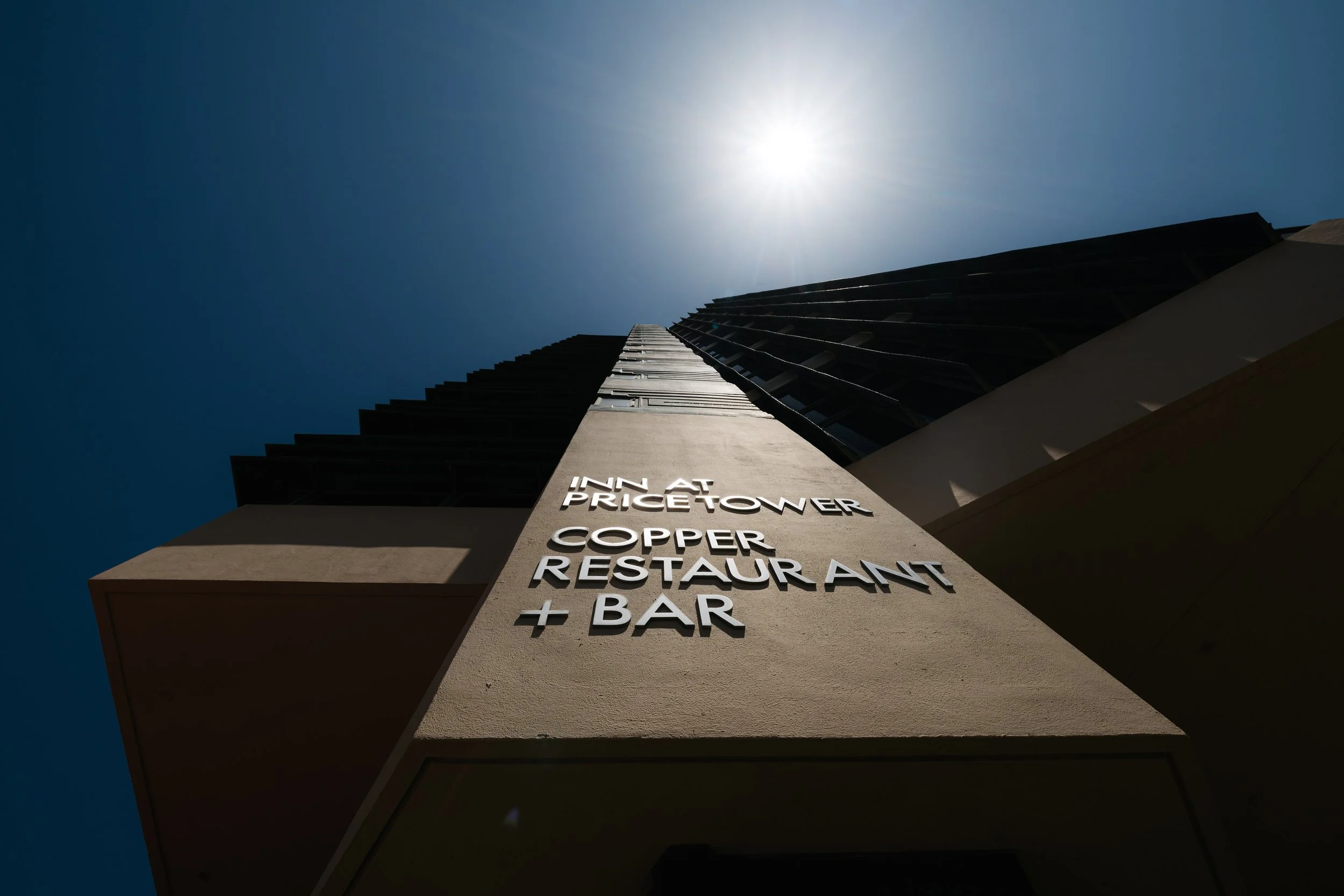
Price Tower, Frank Lloyd Wright's only fully realized skyscraper, stands in downtown Bartlesville.
Andy Dossett | The Wiley Post
At its core, the complaint argues the defendants presented disputed legal claims as settled facts. The plaintiffs allege the publications falsely described the 2024 artifact sales as illegal, unauthorized or in violation of a preservation easement.
The lawsuit also challenges coverage of Blanchard's claim in the Price Tower bankruptcy and an article about civil fraud allegations the Securities and Exchange Commission brought against her husband, Anthem Blanchard.
The dispute over the artifacts
The Price Tower, Frank Lloyd Wright's only completed skyscraper located in Bartlesville, Oklahoma, was transferred to entities controlled by Blanchard in 2023.
In April 2024, those entities sold 11 Wright-designed artifacts to Dallas-based 20C Design. The Frank Lloyd Wright Building Conservancy maintained that a preservation easement restricted the removal or sale of certain items from the building.
A preservation easement is a legal agreement intended to protect historic property or particular features of it. The dispute centers on whether this easement remained enforceable and whether it covered the 11 artifacts.
The plaintiffs argue no court has ruled that the easement applied to the artifacts or that the sales violated it.
The complaint cites an Oklahoma bankruptcy judge's order in May 2025 — after the Price Tower entities entered bankruptcy — approving procedures allowing property to be sold "free and clear" of liens, claims and other interests.
The plaintiffs argue that the order supports 20C Design's ownership of the artifacts and that news organizations ignored or misrepresented it when describing the earlier artifact sales as unlawful. They are also asking the New York court to declare that the 2024 transactions were lawful and that 20C Design held clear title.
In June 2025, the conservancy purchased the artifacts from 20C Design for $185,000. The plaintiffs argue that the purchase undermines the conservancy's public position that the items had been sold illegally or without proper authority.
What the complaint says about news coverage
The complaint focuses heavily on reporting by Gannett's Bartlesville Examiner-Enterprise and reporter Andy Dossett.
The plaintiffs challenge descriptions of the artifacts as "missing," reports that protected items were sold despite the easement and coverage of Blanchard's financial claim in the bankruptcy.
They said the artifacts were publicly listed for sale, making the "missing" description misleading. They also allege an article used an outdated $550,000 figure for Blanchard's bankruptcy claim when a later filing listed the amount as $285,107.88.
The complaint further challenges an October 2025 Examiner-Enterprise article about a Securities and Exchange Commission case involving Blanchard's husband, Anthem Blanchard. Although the story stated that Cynthia Blanchard was not a defendant, the plaintiffs allege its structure falsely associated her with the fraud allegations.
Subsequent bankruptcy orders show that the court disallowed Cynthia Blanchard's claim on Feb. 27, 2026, and denied her request for reconsideration. Blanchard appealed. In April, the bankruptcy court said the claim remained disallowed for purposes of the bankruptcy case unless an appellate court ruled otherwise.
Other challenged publications include:
An Architectural Digest article stating that the easement "legally prohibits" removing the items.
An Artnet article saying the sale "breached" the conservancy's easement.
A Tulsa World caption describing the transaction as a "violation" of the easement.
A Smithsonian Magazine article saying the artifacts were sold despite being protected.
A Dwell article accusing the Blanchards of "stripping" the building and "hocking" artifacts through 20C Design.
Blanchard also says Dwell attributed a quotation to her that she never made.
The plaintiffs argue that these statements treated the conservancy's position as established law even though no court had ruled that the artifact sales violated the easement.
The conservancy's role
The complaint describes the Frank Lloyd Wright Building Conservancy as the main source of the narrative repeated by several publications.
It challenges an August 2025 press release stating that the artifacts were protected by the conservancy's easement and had been sold without its permission.
The plaintiffs allege the conservancy distributed that account to news organizations, which then repeated it without independently reviewing the bankruptcy record.
The complaint also points to similarities in the timing, sourcing and language of several articles as evidence of cooperation among defendants. It does not identify a written agreement among them.
The alleged harm
Blanchard and 20C Design say the coverage damaged their reputations and business relationships.
Blanchard alleges prospective buyers withdrew from purchasing her home after citing negative press. The complaint also claims reporting affected financing relationships and discouraged potential bidders from participating in the Price Tower bankruptcy sale.
20C Design says the coverage damaged its standing with collectors, galleries, auction houses and institutions by casting doubt on its ownership of the artifacts.
The complaint does not provide a final dollar amount for the alleged losses.
The plaintiffs assert claims including defamation, defamation by implication, false light invasion of privacy, interference with business relationships, slander of title, trade libel and civil conspiracy.
They seek compensatory and punitive damages, legal costs and a jury trial. They also ask the court to declare the artifact transactions lawful, find that 20C Design held clear title and order the removal or correction of disputed online articles.
On May 15, the court entered an order scheduling an initial pretrial conference for 10 a.m. Sept. 17.