
Here lies the EE
Andy Dossett | The Wiley Post
Published April 25, 2026
I didn't get the golden age newsroom experience. I pretty much picked the worst time to become a newspaper journalist.
When I first joined the Examiner-Enterprise, it was still printed on site, and the staff had a place to work. The newsroom was small, but two reporters still sat at their desks typing away. The office was massive, mostly empty, dirty, ugly and way past its prime, but I thought it was magical.
I remember being taken to the conference room, sitting down, and seeing major signs of roof leaks with a trash can used for water collection, awards from 20 years ago on the walls, and cardboard boxes sitting in chairs like they were having a meeting that had taken them a few years.
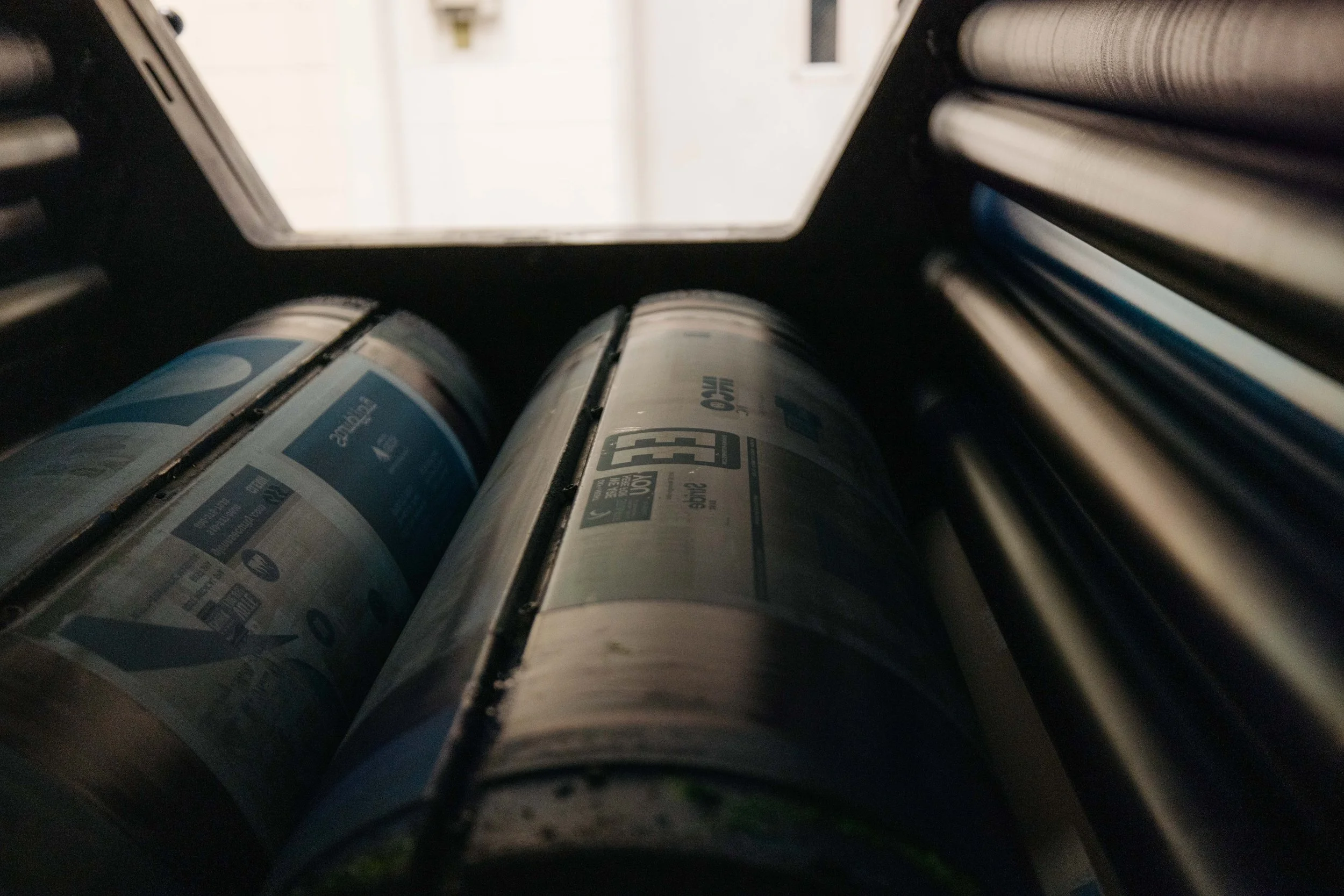
Plates still left on the Examiner-Enterprise printing press before the press was dismantled.
Andy Dossett | The Wiley Post
Sitting at the massive table with 20 or so chairs around it in the derelict room, the editor asked me if I wanted a job. I didn't know it at the time, but I was jumping aboard a sinking ship.
I agreed to be the photographer. It was exciting, and I got a press badge, which was great because I had made a fake one with a laminator while working on an assignment as a stringer for the paper. The real one looked way better.
I got to pick one of the dozen empty cubicles — plenty to choose from. I remember opening the desk drawer and it being full of random stuff. Pens long dried out, legal pads full of notes for unfinished and forgotten stories. Court documents with handwritten notes on the side. The deeper I went into the desk, the handwriting would change.
I found an old cassette tape recorder with a tape still in it. I put batteries in at one point, and it was a voice I didn't recognize talking about something I can't remember.
I do remember finding it odd but fascinating, but now I find it incredibly sad. I was working in a graveyard. Every desk was a little mausoleum with remnants of the work from every reporter who ever sat there.
The press was shut down Oct. 22, 2021, less than six months after I became a legit employee. What little movement was left in the building was gone. All the pieces were still there. Just frozen.
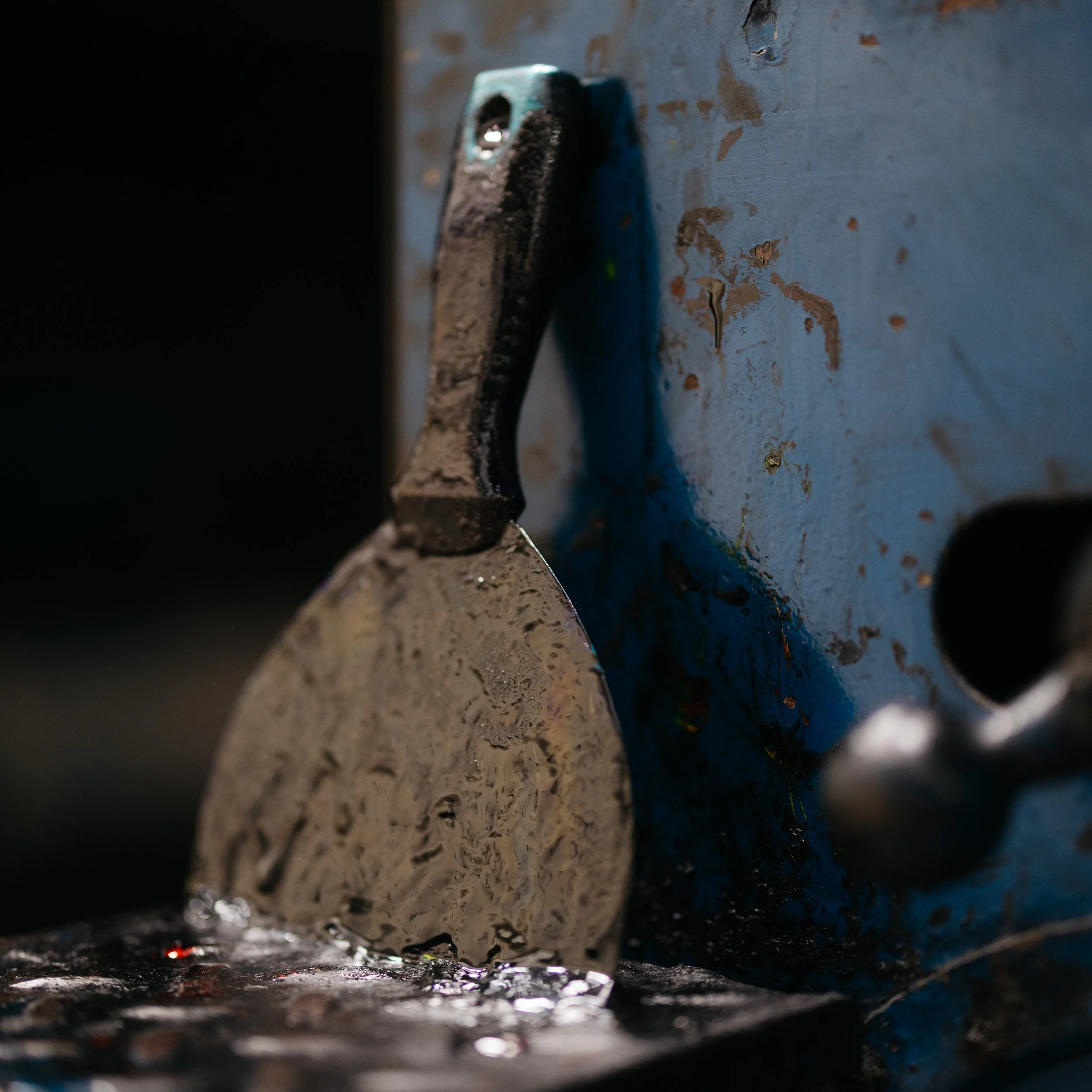
A tool left sitting on the Examiner-Enterprise printing press before the press was dismantled.
Andy Dossett | The Wiley Post
Tools were left sitting on the printing press like they would be picked up and used the next day. Plates still on the machine, waiting to transfer ink to the giant rolls of unblemished paper hanging off the end. I used to climb up on the press like a jungle gym, and my hands would be covered in black ink from touching the rails where the workers once held on.
It was really cool, but it was eerily, oddly quiet standing next to this beast that once had roared.
Anyway, then they started firing everyone else. Or people left because the job sucked.
The few left behind started hearing rumors that they were either closing the paper or selling us. We really wanted the latter to be true. Turns out it was a little bit of each: They were selling the building.
They didn't tell us that was happening; we stumbled upon the real estate listing for our office one day. Then they fired more people. That will be a pattern.
We were told the building was too big, they would get us a nice little office somewhere else, and it was all going to be for the better, but that didn't happen. Well, it kind of happened.
One day, a dude showed up with a truck and said he was here to help clean out the building and take anything of value. I spent the next few days throwing away a lifetime of other people's work. Those of us who still worked for the paper did what we could to save what we could, but instead of a new office, they taped off an area in the back of the building as our "new office." Anything we could fit in there we kept; anything that didn't fit was lost.
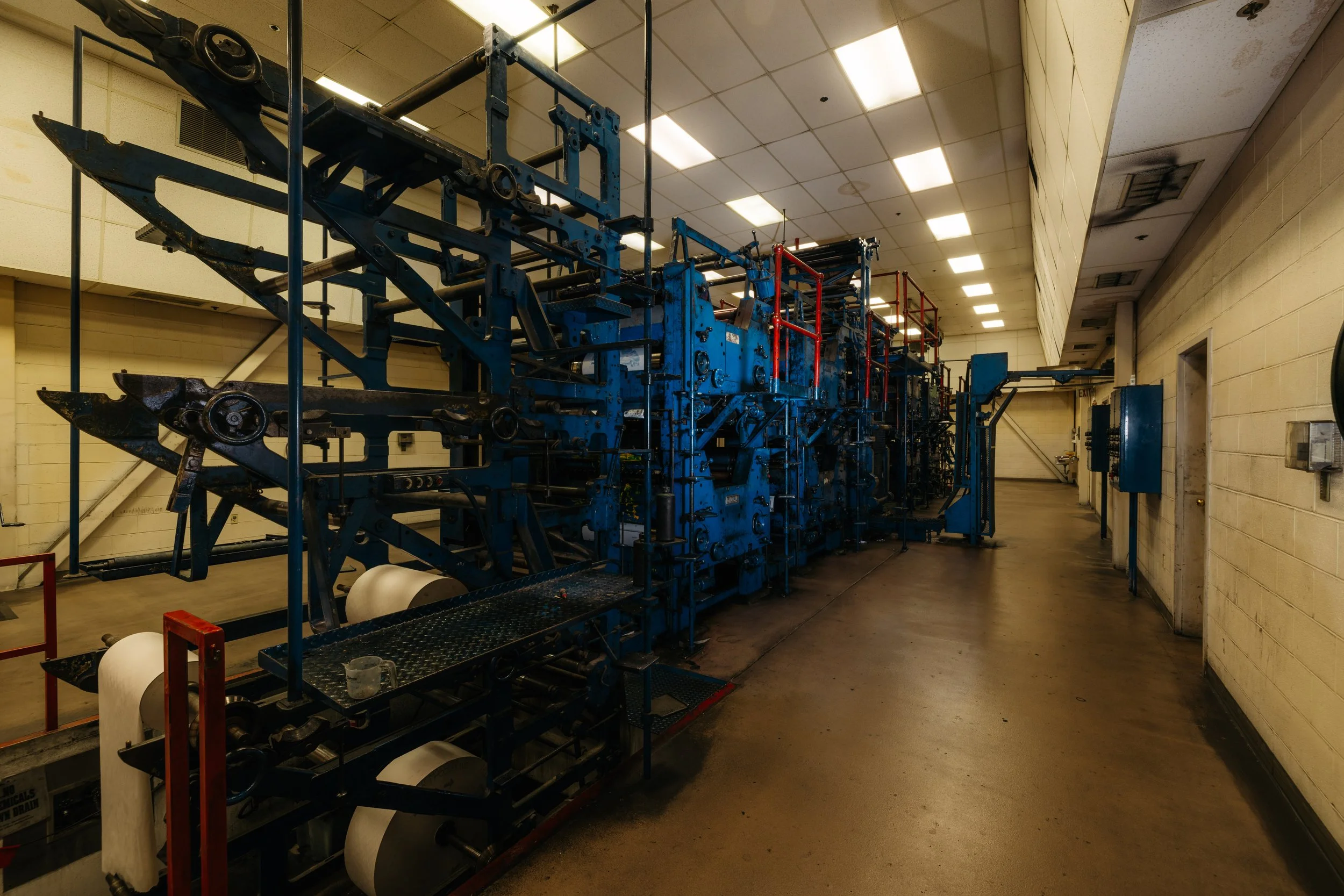
The Examiner-Enterprise printing press before it was dismantled.
Andy Dossett | The Wiley Post
At one point, I think I cried, I mean, none of this was really mine, but I felt the weight of what was happening. I was able to take a small box of supplies and some of the awards I had won as keepsakes.
I did take one other thing. Don't tell anyone and keep this between us, but I ripped the sign off the wall that read "newsroom." I gave it to one of the former editors of the EE. It's sitting in their office today. If anyone asks, it's a cheap knockoff like my first press pass.
All of that was rough, but it wasn't nearly as bad as what they did to Mike Tupa.
Suddenly it's gone
Tupa was an institution; he didn't have an office at the paper, he had a command center. After we cleaned the place out, there was still a significant wear spot on the floor, marking his domain.
After 25 years of service, they fired him. Technically, he retired, but in reality, they saddled him with increasing demands, tying his hands behind his back and admonishing him when he couldn't keep up.
After the building was sold from under us, Tupa still worked from home. His health wasn't great. I used to drive him to games when his car was on the fritz — such a sweet, gentle man. I knew him for only a short time. If you want to hear more about him and his legacy, please read Becky Burch's tribute to Tupa on the website for Bartlesville Area Sports.
Main takeaway: He didn't deserve what happened to him. You can read Tupa's remarks about his departure for yourself, which are still published on the EE's site. Just a warning, you will be giving the EE some ad revenue if you click on it. I won't link it, but you can Google it.
Right before his retirement, Gannett restricted how the newsrooms would operate, the news side and the sports side, even though they operated in the same town, no longer reported in the same structure. We might as well have worked for different companies. Before that, Tupa was the sports section; then, overnight, he only wrote for it.
His sports editors didn't like him, his style, the number of bylines he had and just about everything.
Tupa wouldn't say it outright, but he would tell me about a little of what was happening, and it wasn't hard to connect the dots.
The truth is, for the company, Tupa's position and salary were more valuable than he was. They wanted him gone because they wanted his position for a more important market.
That's what it really came down to — a number on a paper. And when the company wanted you gone, they were really good about selectively applying expectations.
But that's not the end of the story. It gets worse. After Tupa left, he still wrote for the paper. As a small act of rebellion, my editor kept publishing his work. She kept trying to pay him, but he wouldn't accept it. My editor stuck her neck out for Tupa. But the sports department didn't notice or didn't care; they got what they wanted after all, and they didn’t seem to notice what was in our sports section.
Then my editor left — a story for another time. Tupa's freelance work went silent, and when the current editor running the paper — side note: they have never been to Bartlesville or really know where we are located in Oklahoma — took charge, Tupa offered to continue writing for free. They declined.
No real answer as to why. I was given a line of excuses about how he needed a cool-off period or something about how "the paper can't publish free work because of legal issues." Yeah, I don't know.
It broke his heart. He died on April 7.
When people tell me about how sorry or sad the paper is now, I try to remind them that the paper they knew is dead. It's being kept alive so the company can funnel what little it makes to other markets deemed more valuable.
You know, the ones that regularly publish groundbreaking news, like the difference between ladybugs and Asian lady beetles, titled "Asian lady beetle infestation? What to know about the ladybug-looking pest, what to do."
Yeah, that was one of mine toward the end.
Have a tip about this story? Email staff@thewileypost.com